
This course, "Energy and Environment," is intended for second-year undergraduate students in students in their second year of engineering studies (All sections of the field of science and technology). The purpose of this course is to familiarize students with the different energies, their sources, and the impact of their use on the environment. Thus, the course presents a detailed description of energy resources (advantages, disadvantages, consumption, reserves, and storage techniques), as well as different types of pollution (detection, pollution treatment, waste management, and impacts on health and the environment). Since the current global challenge is the production of non-polluting energy, we focus in this course on renewable energies, notably photovoltaic and wind energy, while conforming to the official program.
The course is divided into eight parts:
· The first part, Generalities on Energy and Environment, introduces basic notions of energy and environment (relationship between energy and power, energy categories, environment definition, etc.).
· The second part, Non-renewable Energies, describes the two families of non-renewable energies: fossil energies (coal, petroleum, and gas) and fissile energies (nuclear fusion and fission).
· The third part, Renewable Energies, focuses on different renewable energies (solar, wind, hydraulic, biomass, etc.). Due to the importance of these energies, especially wind and photovoltaic energy for Section A students, and their diversity, this section is more detailed than the others.
· The fourth part, Energy Storage, covers current energy storage techniques and the main features of each technique, presenting advantages/disadvantages and data for each technique.
· The fifth part, Consumption, Reserves, and Evolution of Energy Resources, presents data on energy use and production by energy type and region (worldwide, continental, and Algeria).
· The sixth part, Different Types of Pollution, defines the various sorts and categories of pollution, as well as their sources and types of pollutants.
· The seventh part, Detection and Treatment of Pollutants and Waste, describes various techniques for detecting pollutants and managing waste (treatment and valorization).
· The last part, Impact of Pollution on Health and the Environment, aims at presenting the risks and harmful consequences of pollution on health (diseases) and environment (ecosystem).
Dr. Fathi Bendelala
- Profesor: Dr. FATHI BENDELALA
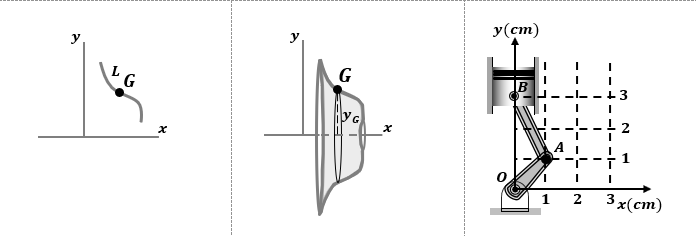
محتوى هذا المقياس "الميكانيك العقلانية" مخصص لطلاب السنة الثانية تكنولوجيا نظام (ل م د) و مهندسين، يضم الجزء الأكبر من برنامج الميكانيكا العقلانية المعتمد و المنصوص عليه في إضبارة مشروع التكوين في جامعة عمار تليجي بالأغواط.
The content of this Module "Rational mechanics" is intended for second-year students systems technology (LMD) and engineers, it brings together the large part of the rational mechanics program taught at the AMAR Telidji University of Laghouat
- Profesor: Dr. TAHAR DAHAME